English
 한국어
 français
 Deutsch
 Español
 italiano
 русский
 português
 العربية
 Türkçe
 Polska

TECHNICAL FIELD GUIDE / RECHARGEABLE LIGHTING
Why a Bigger Battery Does Not Automatically Mean a Longer-Lasting Desk Lamp
A rechargeable desk lamp may advertise 1,200mAh, 3,000mAh or a higher battery capacity. Another may emphasize its 5W or 8W rated power. Neither figure, by itself, tells a buyer how long the light will remain usable after a full charge.
Battery life depends on stored energy, actual power consumption, brightness settings, electronics efficiency and the lamp's shutdown behavior. For OEM and wholesale buyers, these details are essential when evaluating rechargeable lighting samples.
This guide explains rechargeable desk lamp battery life from a practical testing perspective. You will learn how to interpret mAh, volts, watt-hours and rated power, estimate theoretical operating time, measure actual runtime, and request reliable specifications from a supplier.
The examples include OneFire's foldable LED desk lamps, but the testing principles apply to many compact rechargeable lamps. All calculation examples are illustrative unless explicitly identified as verified product specifications.
01 / UNDERSTANDING THE NUMBERS
mAh, Wh and Watts: What Do They Actually Tell You?
Battery capacity and lamp power are related but different measurements. Understanding the units is the first step toward comparing rechargeable desk lamps accurately.
mAh
Milliamp-hours: Battery Charge Capacity
Milliamp-hours measure electrical charge capacity. A 1,200mAh battery has a nominal charge capacity of 1.2Ah. However, battery voltage must also be considered before comparing stored energy between different battery configurations.
Wh
Watt-hours: Nominal Battery Energy
Watt-hours express energy. This unit combines battery capacity and nominal battery voltage, making it more useful than mAh alone for comparing batteries with different nominal voltages.
W
Watts: Power Consumption or Rated Power
Watts measure power. A lamp's rated wattage provides useful product information, but the actual power drawn during operation can change with the brightness mode, LED driver, and electronic controls. Rated power should not automatically be treated as constant battery discharge power.
A common mistake:A 5V USB charging input is not necessarily the same as the battery's nominal cell voltage. When converting mAh to Wh, use the verified nominal voltage of the battery pack, not the charging connector's input voltage.
02 / CALCULATION LAB
How to Estimate Rechargeable LED Desk Lamp Runtime
A useful calculation begins with the battery's nominal stored energy. The second step considers the lamp's average electrical power consumption and the energy actually available to the system.
FORMULA A / BATTERY ENERGY
Wh = mAh × Battery Voltage ÷ 1,000
Use the battery pack's nominal voltage. The result is its approximate nominal energy, not a promise that every watt-hour is delivered to the LEDs.
FORMULA B / PLANNING ESTIMATE
Estimated Hours = Usable Battery Energy ÷ Average System Power
For a preliminary engineering estimate, usable battery energy can be represented by nominal Wh multiplied by an assumed usable-energy factor. Actual usable energy must be established through testing.
ILLUSTRATIVE EXAMPLE / NOT AN ONEFIRE TEST RESULT
A Hypothetical 2,000mAh Rechargeable Lamp
Battery capacity: 2,000mAh
Assumed nominal voltage: 3.7V
Nominal energy: 2,000 × 3.7 ÷ 1,000 = 7.4Wh
Assumed usable-energy factor: 80%
Assumed average system power: 2W
CALCULATED PLANNING ESTIMATE
2.96 hours
7.4Wh × 0.80 ÷ 2W = 2.96 hours
This number is a mathematical illustration only. The assumed 80% factor and 2W average draw are not measurements from an actual desk lamp. Real runtime may differ substantially due to battery, driver, dimming and cutoff behavior.
It is important to distinguish an estimate from an actual runtime claim. Battery capacity may change with temperature, discharge conditions and aging. Electronics consume power, and many lamps adjust their LED output while discharging.
For a retail specification, buyers should request measured results under a defined lighting mode instead of publishing theoretical numbers as guaranteed performance.
03 / REAL PRODUCT REFERENCES
What OneFire WH-C30 and WH-C17 Can Teach Buyers
OneFire's portable desk lamp range demonstrates why battery specifications must be interpreted alongside the lighting system. The WH-C30 and WH-C17 differ in rated power, dimensions, lighting modes and product positioning.
MODEL REFERENCE A
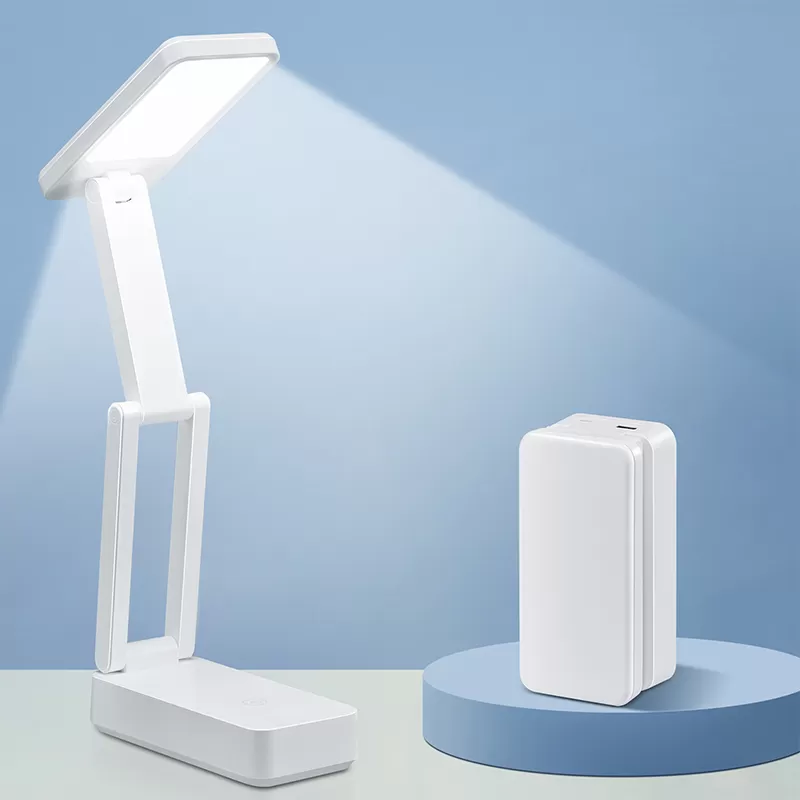
WH-C30 Folding Desk Lamp
The WH-C30 Folding Desk Lamp features an adjustable 180-degree structure, warm and white lighting modes, stepless dimming, Type-C charging and a 45-minute timer.
Its published rated power is 8W. However, the product description lists a 6000mAh battery while its specification table lists 10000mAh. These figures should be reconciled with the actual battery specification before using the product in a runtime calculation.
OEM lesson: Ask for the correct battery capacity, nominal battery voltage, available Wh rating and measured runtime at specified brightness settings. The 45-minute timer is an automatic shutoff function, not a verified battery-life duration.
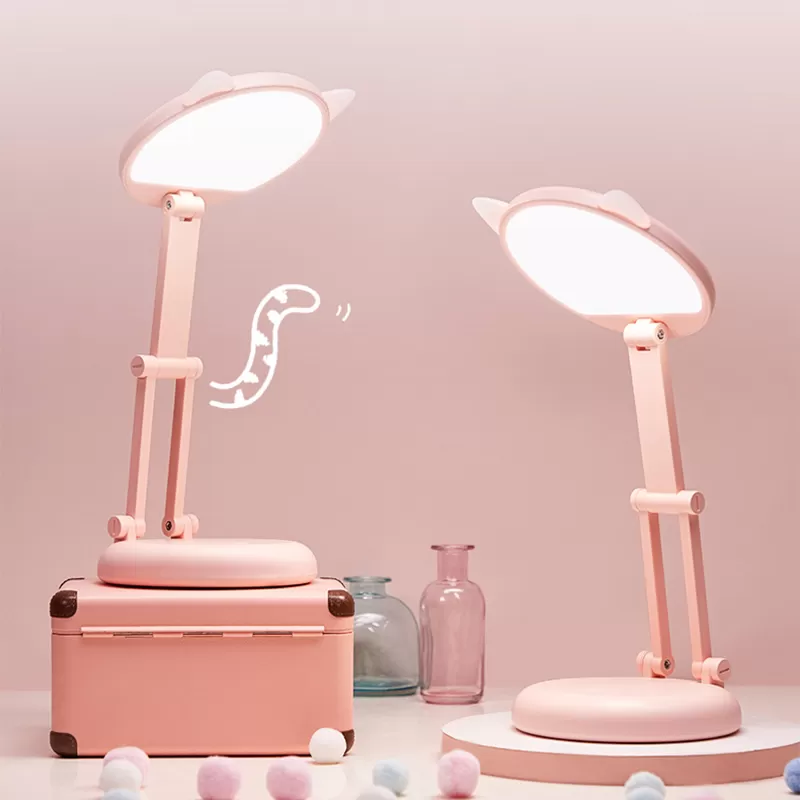
MODEL REFERENCE B
WH-C17 Portable Desk Lamp
The WH-C17 Portable Desk Lamp features a cat-ear design, 1200mAh rechargeable battery, 1.5W rated power, natural light, stepless dimming, touch control and Type-C charging.
Although the published capacity and rated power provide a useful starting point, they are not sufficient to calculate verified runtime. The nominal battery voltage, average operating power and measured discharge performance are still needed.
OEM lesson: Test the WH-C17 separately at its highest and lower dimming settings. A 1200mAh battery specification should not be converted into a promised number of hours without actual operating data.
For additional folding and rechargeable designs, buyers can explore the OneFire Portable Table Lamp collection.
04 / DIMMING & ENERGY CONSUMPTION
Why Brightness Settings Change Desk Lamp Battery Life
Dimming is one of the most important factors affecting rechargeable lamp runtime. In many LED lamp designs, reducing light output also reduces electrical power consumption, although the relationship is not always proportional.
Actual power depends on the LED driver, control method and any additional electronics. For this reason, it is useful to evaluate several operating modes instead of reporting a single battery-life number.
RECOMMENDED RUNTIME TEST MODES
MAX / Highest Brightness
Check runtime and light-output consistency at the highest available setting.
MID / Reference Brightness
Select and document a reproducible intermediate setting for comparison.
LOW / Minimum Usable Brightness
Evaluate low-brightness endurance and confirm the output remains usable for its intended purpose.
Brightness Percentage Is Not Power Percentage
A lamp set to 50% brightness does not necessarily consume exactly 50% of its full-power electrical input. Driver overhead, dimming behavior and the relationship between perceived brightness and light output all affect the result.
Warm and White Lighting Modes May Differ
If a desk lamp uses separate warm and white LED channels, its power consumption may vary depending on which channels are active. Two settings that appear similarly bright may not draw identical power.
For a dual-color product such as the WH-C30, buyers should request separate runtime results for the key lighting configurations when those differences are relevant to the final retail specification.
05 / LAB TEST PROTOCOL
A Repeatable Battery Runtime Test for OEM Desk Lamp Samples
A runtime test is only useful if another person can reproduce it. The test record should identify the lamp model, battery configuration, operating mode, environmental conditions and the point at which the test is considered complete.
SAMPLE VALIDATION PROCEDURE / SIX STEPS
PROCEDURE 01
Identify the Exact Sample
Record model number, hardware revision, firmware version where applicable, battery configuration and sample identification. Note any differences from the standard production model.
PROCEDURE 02
Charge Using the Approved Method
Charge the battery according to the manufacturer's instructions. Record charging input and the point at which the device indicates charging completion. Disconnect external power before starting a battery-only runtime test.
PROCEDURE 03
Fix the Light Mode and Test Geometry
Choose the warm, white or mixed setting and the required brightness level. Record lamp angle, measurement position, distance to the light sensor, ambient lighting and room temperature.
PROCEDURE 04
Record Light Output Over Time
Record the starting time and illuminance in lux at a fixed position. Continue readings at agreed intervals, for example every 30 minutes, without moving the lamp or sensor.
PROCEDURE 05
Define the End of Usable Runtime
Record both total time until shutoff and the time until light output falls below a predefined threshold, if relevant. For example, a project may specify an agreed percentage of initial illuminance as its test endpoint. This threshold must be identified as a project criterion, not a universal industry standard.
PROCEDURE 06
Repeat and Report the Results
Repeat tests under the same conditions, ideally across multiple samples or cycles as appropriate to the project. Report variation, unexpected dimming, automatic shutdown behavior and any changes after repeated charging.
WHAT A GOOD RUNTIME REPORT SHOULD CONTAIN
Sample identification: Model, battery version, hardware revision and date of test.
Test setup: Ambient temperature, charging method, lamp position, brightness mode and measurement distance.
Measurement record: Starting illuminance, readings over time, any programmed dimming and the final shutdown time.
Final result: Usable runtime according to the agreed endpoint, total hours until shutoff and any observed sample variation.
A fixed-position lux meter can document changes in illuminance over time. For more comprehensive product photometry, the appropriate professional measurement equipment and methodology may be required. A phone-based light sensor should not be presented as equivalent to calibrated laboratory equipment.
06 / CHARGING & ELECTRONICS
Charging Time, Type-C Input and Battery Protection
A rechargeable desk lamp's charging information should be evaluated separately from battery runtime. USB input power, battery capacity and charging duration are related, but they are not interchangeable specifications.
USB Input Ratings Do Not Guarantee Charging Speed
For example, a USB input marked 5V/1A represents a nominal input rating of up to 5W under that voltage and current combination. It does not establish that the battery continuously receives 5W or that a particular recharge time is guaranteed.
Charging controllers regulate current and voltage through different stages. Charging losses, battery temperature, cell configuration and protection circuits can affect the total time required.
Type-C Describes a Connector, Not the Complete Charging System
A Type-C connector does not by itself confirm USB Power Delivery support, fast charging, or a particular charging protocol. Buyers should verify the supported input requirements, cable and adapter compatibility, and whether charging while operating is permitted.
Battery Protection and Long-Term Performance
Battery-powered lighting should be evaluated for appropriate charging and discharge protection, overheating behavior and safe shutdown under expected operating conditions. A battery's useful capacity may also decline with age and repeated charging cycles.
For OEM purchasing, ask for model-specific battery documentation, charger requirements and relevant safety test evidence rather than relying only on marketing phrases such as "long-lasting battery" or "fast charging."
07 / OEM BUYER SPECIFICATION
What Should Be Included in a Rechargeable Desk Lamp OEM Datasheet?
A useful technical specification should make the product's electrical configuration and tested performance clear enough for independent review. These fields can also help prevent inconsistencies between a website description, quotation and final mass-production product.
Battery Identification
Battery type, cell or pack model, nominal voltage, rated capacity in mAh, nominal energy in Wh and applicable protection specifications.
Light Output and Power
Rated power, operating modes, dimming controls, measured illuminance where relevant, and the conditions used for power-consumption measurements.
Verified Runtime
Runtime at clearly defined brightness settings, ambient temperature, number of samples, test endpoint and whether the result includes a reduced-brightness operating period.
Charging Requirements
Connector type, supported input voltage and current, approved charging equipment, measured charging time and charging-related limitations.
Construction and Controls
Product dimensions, materials, folding structure, brightness controls, timers, user instructions and the exact product configuration being quoted.
Quality and Compliance Documents
Available electrical and battery safety records, product labeling, applicable transport documents, packaging details and market-specific supporting information for the exact model.
EXTERNAL TECHNICAL REFERENCE
For battery energy ratings, see Transport Canada's guidance on determining battery watt-hour ratings. It explains how nominal voltage and battery capacity relate to Wh. Transportation requirements vary by destination, battery configuration and shipping mode.
08 / COMMON SPECIFICATION ERRORS
Five Battery Life Claims Buyers Should Question
When evaluating rechargeable lamp quotations or retail product descriptions, these claims deserve additional verification.
"A 5,000mAh Lamp Always Runs Longer Than a 3,000mAh Lamp"
Not necessarily. Battery voltage, actual power consumption and usable energy all affect runtime.
"The Lamp Is Rated 8W, So Its Battery Always Supplies 8W"
Rated power does not automatically equal continuous battery draw at every brightness setting.
"A 45-Minute Timer Means 45 Minutes of Battery Life"
A timer controls automatic shutdown. It does not prove how long the device could operate without that timer.
"A Type-C Port Guarantees Fast Charging"
The connector type alone does not establish a supported charging protocol or measured recharge duration.
"Up to 12 Hours" Without a Brightness Setting
An unqualified maximum runtime is difficult to compare. Ask which brightness mode, temperature and test endpoint produced the claim.
09 / FREQUENT TECHNICAL QUESTIONS
Rechargeable Desk Lamp Battery Life FAQs
1. How long should a rechargeable LED desk lamp last on one charge?
There is no universal runtime. It depends on usable battery energy, average power consumption, brightness and operating conditions. A reliable figure should come from a test conducted at a stated brightness setting and endpoint.
2. Is mAh or Wh more important for comparing desk lamp batteries?
Wh is more useful for comparing nominal energy across different battery voltages. mAh describes electrical charge capacity, which should be interpreted alongside the battery's nominal voltage.
3. Does lowering desk lamp brightness increase battery life?
Often, yes, because lower LED output can reduce electrical power demand. However, the relationship depends on the lamp's driver and controls. Actual runtime should be measured at different brightness settings.
4. Can battery life be calculated from rated wattage alone?
No. A runtime estimate also requires battery energy and a realistic average system power value. Rated power may not equal actual power consumption throughout the discharge cycle.
5. How can an OEM buyer test the runtime of a rechargeable lamp?
Fully charge the approved sample, select a defined light mode, record illuminance at a fixed position over time, and measure the duration until an agreed endpoint or shutdown. Repeat the test under consistent conditions.
6. Does a Type-C rechargeable desk lamp charge faster?
Not necessarily. Type-C identifies the connector format. Charging speed depends on the supported input, charging electronics, battery characteristics and actual charging conditions.
7. What battery data should suppliers provide for an OEM desk lamp?
Buyers should request nominal voltage, battery capacity, Wh rating, charging requirements, measured runtime by lighting mode, applicable battery documentation and identification of the specific product version.
Final Conclusion: Test Usable Light, Not Just Battery Capacity
A rechargeable desk lamp's battery life is not defined by a single number printed on a product specification sheet. Milliamp-hours describe charge capacity, watt-hours indicate nominal stored energy, and watts describe power. Actual runtime depends on how the complete lamp system uses that energy.
For OEM and private-label buyers, the most reliable approach is to combine correct battery data with reproducible testing. Measure light output over time, compare clearly defined dimming modes and confirm the sample matches the final product configuration.
The WH-C30 and WH-C17 illustrate why published specifications need careful interpretation. Buyers who request verified battery and runtime records can make better sourcing decisions and build more accurate product information for their retail markets.
EXPLORE RECHARGEABLE DESK LIGHTING
Review OneFire Portable LED Desk Lamps
Explore the OneFire portable table lamp collection, including foldable rechargeable designs with different lighting modes and control features.
For a broader product overview, see the portable LED lighting range.
If you need model-specific specifications, samples or OEM/ODM information, contact the OneFire team.