English
 한국어
 français
 Deutsch
 Español
 italiano
 русский
 português
 العربية
 Türkçe
 Polska

Importing LED night lights involves more than choosing attractive designs, comparing quotations and arranging international shipping. Before placing an order, importers need to determine which product safety, electrical, environmental and labeling requirements apply in their destination markets.
A rechargeable silicone animal night light may have different compliance considerations from a plug-in bedside lamp or a children's projector with Bluetooth audio. Product classification, power supply, battery chemistry, intended users and electronic functions can all change the required documentation.
This LED night light import compliance checklist explains what B2B buyers should verify when sourcing products for the United States, European Union and United Kingdom. It covers CE marking, RoHS, FCC requirements, children's product certification, UKCA, lithium battery transport documentation and practical supplier verification.
Regulatory scope:This guide reflects publicly available requirements as of November 2026. It is a procurement reference, not a product-specific legal determination. Applicable rules must be confirmed for the finished product, intended use and country of sale.
IMPORT COMPLIANCE AT A GLANCE
What Should LED Night Light Importers Check First?
Start with the product's intended market and technical configuration. The following categories can help identify which documents may be relevant.
CPSC product classification, applicable children's product rules, FCC equipment requirements and certification filing.
Applicable CE legislation, EU Declaration of Conformity, RoHS, product safety, traceability and WEEE obligations.
Great Britain CE or UKCA acceptance, applicable product safety rules, RoHS and importer identification.
Battery chemistry, applicable UN 38.3 test summary, transport classification and shipping documentation.
PRODUCT CLASSIFICATION
1. Classify the LED Night Light Before Requesting Certificates
The term "LED night light" describes a broad product category rather than a single regulatory classification. A soft silicone bedside lamp, an electrical plug-in light and a Bluetooth-enabled projector may all be marketed as night lights, but their applicable requirements can differ.
Begin by documenting the product's electrical design, intended user, marketing claims, accessories and destination market. In particular, do not automatically classify every animal-shaped lamp as a toy or every nursery light as a general-use household product.
PRODUCT TYPE 01
Rechargeable Silicone Night Lights
Review the material specification, age-related product positioning, electrical input, battery type and accessibility of components. Children's product requirements may apply depending on the intended use and marketing.
PRODUCT TYPE 02
Plug-In LED Night Lamps
Check operating voltage, power adapter or mains connection, accessible electrical components, electromagnetic compatibility and applicable lighting product standards.
PRODUCT TYPE 03
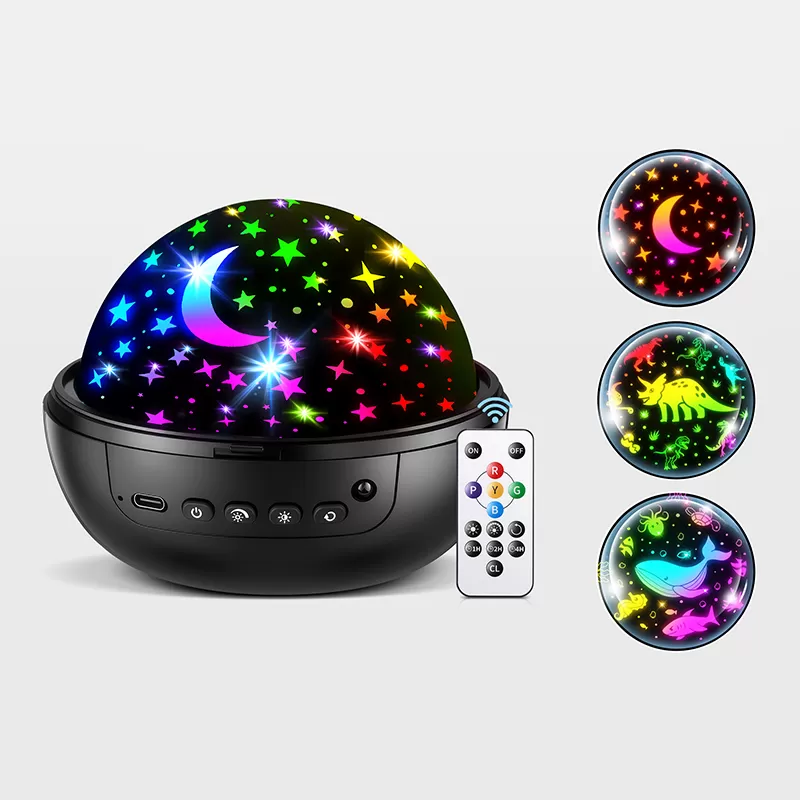
Projector and Bluetooth Night Lights
Projection optics, radio transmitters, audio electronics and rechargeable batteries can introduce additional verification requirements. Confirm the functions of the exact model and version.
Important distinction:A product marketed for children's bedrooms is not automatically a toy. However, its appearance, intended age range, instructions and advertising may affect how regulators classify it. Confirm the product category before selecting a testing program.
UNITED STATES IMPORT REQUIREMENTS
2. US Compliance: CPSC, FCC and Children's Product Documentation
For the US market, an importer should distinguish consumer product safety requirements from radio-frequency equipment requirements. CPSC and FCC responsibilities are not interchangeable, and the applicable documentation depends on the product.
CPSC: Children's Product Certificate or General Certificate?
The US Consumer Product Safety Commission defines children's products using factors including intended use, manufacturer statements, marketing and consumer recognition. Products designed or intended primarily for children aged 12 or younger may fall within the children's product category.
Where applicable children's product safety rules require certification, a Children's Product Certificate (CPC) must be supported by testing from a CPSC-accepted third-party laboratory. A general-use product subject to applicable CPSC certification rules may instead require a General Certificate of Conformity (GCC).
Official reference: CPSC Children's Product Classification Guidance and Children's Product Certificate Requirements.
2026 US IMPORT UPDATE
CPSC Certificate eFiling Is Now in Effect
From July 8, 2026, importers of consumer products subject to applicable CPSC certification requirements generally must electronically file certificate data with US Customs and Border Protection. A later implementation date applies to covered entries from Foreign Trade Zones.
For shipments requiring certification, coordinate the certificate details with your importer of record and customs broker before importation. Check the current requirements on the CPSC Certificates and eFiling Guidancepage.
FCC: Does Every LED Night Light Need FCC Certification?
Not necessarily. The FCC regulates radio-frequency devices, including intentional and certain unintentional radiators. Requirements vary by the device's electronics and emissions characteristics.
A night light equipped with Bluetooth or another radio transmitter generally requires evaluation under the applicable intentional-radiator authorization rules. Some LED lighting electronics may be subject to unintentional-radiator requirements, for which a Supplier's Declaration of Conformity may be an available authorization route. Buyers should confirm the correct procedure for the finished device rather than requesting an undefined "FCC certificate."
Regulatory reference: 47 CFR Part 15 - Radio Frequency Devices.
EUROPEAN UNION REQUIREMENTS
3. EU Compliance: CE Marking, RoHS, RED and Product Safety
For the European Union, a correct conformity assessment begins with identifying the legislation that applies to the finished LED night light. CE marking is not a universal test certificate, and a report covering one electrical or chemical requirement does not establish compliance with every applicable EU rule.
What Does CE Marking Actually Mean?
CE marking indicates the manufacturer's declaration that the product conforms to the applicable EU requirements that provide for CE marking. Depending on the legislation and assessment route, manufacturer self-assessment or involvement of a notified body may be required.
There is no central EU authority that issues a single universal CE approval certificate. Importers should request the appropriate EU Declaration of Conformity and supporting technical documentation. European Commission CE Marking Guidance.
RoHS: Restricted Substances in Electrical Equipment
EU RoHS Directive 2011/65/EU restricts specified hazardous substances in electrical and electronic equipment within its scope. Buyers should request evidence relevant to the finished product, such as a properly supported conformity declaration and appropriate materials or component test information.
Official guidance: European Commission RoHS Directive.
Electrical Safety, EMC and the Low Voltage Directive
The EU Low Voltage Directive applies to electrical equipment operating within specified voltage ranges: 50-1000V AC or 75-1500V DC. A 5V rechargeable night light does not automatically fall directly within that directive solely because it is electrical. However, a supplied mains power adapter may have separate applicable obligations, and other product safety requirements can still apply to the lamp.
Official guidance: EU Low Voltage Directive.
Radio Equipment Directive for Bluetooth Models
Night lights with integrated Bluetooth or other radio transmitters may fall under Directive 2014/53/EU, commonly called RED. This framework covers radio spectrum use, electromagnetic compatibility and safety requirements for radio equipment. The precise assessment depends on the device and its functions.
Official guidance: EU Radio Equipment Directive.
General Product Safety and Traceability
The EU General Product Safety Regulation, applicable since December 13, 2024, introduces requirements relevant to general consumer product safety, traceability and online sales. It works alongside sector-specific EU legislation, with its provisions applying according to the product and the safety aspects covered.
Importers should verify manufacturer identification, the appropriate EU-based responsible economic operator, product identification and applicable warnings. Online listings also need to be checked for the relevant required information. Regulation (EU) 2023/988.
Do Importers Need WEEE Registration?
Electrical and electronic equipment placed on EU markets may carry waste management and producer responsibility obligations. Depending on the business role and country of sale, this can include WEEE registration, reporting and appropriate product marking.
See the EU WEEE Responsibilities Guide for further information.
UNITED KINGDOM REQUIREMENTS
4. UK Compliance: When Is CE or UKCA Marking Accepted?
United Kingdom product rules require particular attention because the arrangements for Great Britain and Northern Ireland are not identical. Buyers should confirm whether goods are intended for England, Scotland and Wales, or for Northern Ireland.
Great Britain: CE and UKCA Marking
The UK government continues to recognize CE marking for a broad range of relevant product regulations in Great Britain, alongside UKCA marking. Consequently, it is not accurate to say that all imported LED night lights must be UKCA marked instead of CE marked.
However, the product must still meet the applicable Great Britain requirements. Importers should check the correct conformity assessment route, declaration, supporting technical documentation, labeling and economic operator responsibilities.
Northern Ireland: Check the Separate Rules
Northern Ireland has different arrangements for product conformity and markings. A product intended for sale throughout the United Kingdom should be assessed against the requirements for each relevant market rather than assuming one marking decision automatically covers every destination.
For official guidance, consult:
UK Government CE and UKCA Market Guidance
CHILDREN'S PRODUCT ASSESSMENT
5. Are Silicone Animal Night Lights Considered Children's Toys?
Soft animal-shaped lights are popular for children's bedrooms and gifts. Nevertheless, their classification requires careful evaluation. A lamp designed primarily as lighting equipment may have a different regulatory treatment from a product designed or intended for children's play.
For US products, the CPSC may consider the intended age group, consumer perception, advertising and physical design. In the EU and Great Britain, toy safety legislation applies where a product meets the relevant definition of a toy. Buyers should not use appearance alone to determine whether toy-specific rules apply.
Questions to Resolve Before Importing
Intended use: Is the product marketed as lighting, decoration, a toy or a multifunctional product?
Target age: Is a specific age group stated in packaging, advertising or instructions?
Material: Which silicone, ABS, coatings, pigments and other accessible materials are used?
Construction: Are there removable components, battery compartments, cords or other potential hazards?
Evidence: Which product-specific reports support the intended market and age-related claims?
EU Toy Safety Rules: A 2026 Update
Regulation (EU) 2025/2509 on toy safety entered into force on January 1, 2026, but its main application date is August 1, 2030. During the transition, the existing Toy Safety Directive 2009/48/EC remains relevant.
For products that fall within the toy definition, check current applicable requirements and monitor future changes. See the European Commission Toy Safety Legislation.
LITHIUM BATTERY SHIPPING
6. Battery Documentation: UN 38.3 and International Shipping
Many portable LED night lights are rechargeable. Before shipping, buyers should confirm the actual battery chemistry and configuration, since lithium batteries are subject to specific transport requirements.
For lithium battery products, the UN Manual of Tests and Criteria subsection 38.3 provides relevant testing provisions. Importers and shipping partners may need the applicable battery test summary and other transport details.
Battery Identification
Confirm chemistry, model, voltage, capacity and watt-hour rating where relevant.
UN 38.3 Test Summary
Request the appropriate test summary and verify that the battery model matches the product being shipped.
Shipping Classification
Confirm packaging, marking, documentation and carrier requirements for the chosen transport mode.
Important: A lithium battery UN 38.3 test summary is not a substitute for electrical product safety certification, and a generic battery document does not prove that a particular battery model was tested. Refer to theUNECE Manual of Tests and Criteria.
REAL PRODUCT EXAMPLES
7. Applying the Checklist to Real OneFire Night Light Models
A practical compliance review should begin with the manufacturer's published product specifications. The following examples show how buyers can identify issues for documentation review before ordering. They do not establish that any specific model has obtained a particular market approval.
MODEL WH-A13
Cute Bunny Night Light
The WH-A13 uses silicone and ABS materials, offers warm and RGB lighting, and has a published 1200mAh rechargeable battery with Type-C charging.
Material review: Silicone, ABS and colorants.
Electrical review: 5V/1A input and charging system.
Product classification: Confirm intended users and positioning.
Transport: Confirm battery chemistry and applicable documents.
MODEL WH-A17
Snoring Cat Night Light
The WH-A17 combines a sleeping cat design with silicone and ABS construction, warm lighting, RGB effects and a published 1200mAh rechargeable battery.
Material review: Accessible materials and surface finishes.
Electrical review: Type-C charging and input requirements.
Child-related claims: Confirm intended use and supporting evidence.
Transport: Confirm battery specification and shipping classification.
For additional designs, explore the completeOneFire silicone night light product range. For models involving projection effects, music or Bluetooth, see the kids' projector lamp collection.
SUPPLIER DOCUMENT VERIFICATION
8. What Documents Should Importers Request from an LED Night Light Supplier?
A supplier compliance package should be organized by product model, electrical configuration and destination market. Requesting a large collection of unrelated certificates is less useful than verifying a smaller set of documents that actually apply to the selected finished product.
01
Product Specification
Model, material, voltage, power, charging system, battery and exact product version.
02
Applicable Test Reports
Reports covering applicable electrical, mechanical, chemical, radio or toy-related requirements.
03
Conformity Documents
EU or UK declarations, CPC or GCC where applicable, and relevant equipment authorization evidence.
04
Battery Documents
Battery identification, applicable UN 38.3 test summary and transport details.
05
Labeling and Instructions
Required identification, warnings, manuals, local-language information and packaging labels.
06
Sample and Order Records
Approved sample, final bill of materials, packaging artwork and product change records.
Warning Signs in a Supplier's Compliance Package
Model mismatch:The report identifies a different model or product configuration.
Scope mismatch:The document covers a component but is presented as proof of conformity for the finished product.
Unclear laboratory:The laboratory's identity, accreditation or test scope cannot be verified where accreditation is required.
Outdated configuration:The product has changed since testing, but the supplier cannot explain whether the changes affect conformity.
PRE-SHIPMENT REVIEW
9. A Practical Pre-Shipment Compliance Workflow
Before placing a bulk order, importers can use the following workflow to reduce the risk of missing documentation or discovering product differences after production.
Step 1. Define the Destination Market
Identify the countries where the final product will be sold and any applicable platform or retailer requirements.
Step 2. Confirm Product Classification
Record intended use, age-related claims, electrical specifications, battery chemistry and radio functions.
Step 3. Review the Applicable Test Plan
Agree on the relevant product-specific requirements with a competent testing or regulatory professional.
Step 4. Approve a Representative Sample
Check the finished design, controls, accessible materials, battery, labels and supplied accessories.
Step 5. Verify the Final Documents
Match reports and declarations to the final model, business entity, production version and destination market.
Step 6. Confirm Shipping and Import Filing
Coordinate battery transport records, carton marking, customs documentation and applicable electronic certificate filings.
FREQUENTLY ASKED QUESTIONS
LED Night Light Import Compliance FAQ
1. Does every LED night light need CE certification?
Not every product follows the same CE-related assessment. Importers must determine which EU legislation applies to the finished product. Where CE marking is required, the applicable conformity assessment and documentation must be completed before the product is placed on the market.
2. Is a CE mark the same as a RoHS test report?
No. CE marking indicates conformity with applicable EU legislation that provides for the mark. RoHS concerns specified restricted substances in electrical and electronic equipment. A RoHS test report may form part of the supporting evidence but does not replace other applicable requirements.
3. Do silicone night lights for children's bedrooms require a CPC in the US?
A CPC is required when the product is a children's product subject to applicable CPSC children's product safety rules requiring certification. Classification depends on the specific design, intended use and marketing, not solely on an animal shape or nursery setting.
4. Does a US importer need FCC documentation for an LED night light?
FCC equipment requirements depend on the product's radio-frequency characteristics. A Bluetooth-enabled lamp and a basic LED night light may follow different authorization procedures. Importers should confirm the applicable requirements for the finished device.
5. Is UKCA mandatory for every LED night light sold in Great Britain?
No. Great Britain continues to accept CE marking alongside UKCA for many relevant product regulations. Products must still meet the applicable Great Britain safety and conformity requirements. Northern Ireland follows different arrangements.
6. Does a rechargeable night light need UN 38.3 documentation?
If the product contains lithium cells or batteries subject to the applicable transport rules, the relevant UN 38.3 testing and test summary requirements must be addressed. Confirm the actual battery chemistry and shipping classification before arranging transport.
7. Does a CB test certificate replace national market requirements?
No. An applicable IECEE CB Scheme test certificate and report can support international electrical safety conformity processes, but buyers must still satisfy the destination market's relevant product requirements and any additional certification or authorization obligations.
8. Can a test report for one night light model cover another model?
Not automatically. Coverage depends on the applicable testing rules and whether the models share sufficiently equivalent designs, components and configurations. Model variants and changes should be reviewed with a competent test laboratory or conformity specialist.
Conclusion: Match Compliance Documents to the Finished Product
The most effective way to manage LED night light import compliance is to begin with product classification and the destination market. CE, RoHS, FCC, UKCA, CPSC certification and lithium battery documentation are not interchangeable, and no single certificate should be assumed to cover every night light model.
For wholesale buyers, documentation should be connected to the approved product sample, actual materials, electrical configuration and intended use. Reviewing these details before bulk production is more effective than requesting compliance paperwork only after the goods are ready to ship.
OneFire offers multiple LED night light designs through its silicone night light collection and children's projector lamp range. Buyers should discuss the required destination-market documentation for their selected model and configuration before confirming an OEM or wholesale order.
B2B NIGHT LIGHT SOURCING
Discuss Your LED Night Light Import Requirements with OneFire
Tell OneFire which LED night light model you are considering, your estimated order quantity and the countries where you plan to sell it. The team can discuss product specifications, available documentation and OEM or wholesale project requirements.
Contact OneFire About Your Wholesale Project
Email:marketing@onefire.cn