English
 한국어
 français
 Deutsch
 Español
 italiano
 русский
 português
 العربية
 Türkçe
 Polska

For desk lighting, illuminance, measured in lux, is one of the most useful performance indicators. A compact LED lamp positioned correctly may provide more usable light on a reading surface than a higher-powered lamp with unsuitable light distribution.
This guide explains how many lux you need for common desk activities, how lux differs from lumens and watts, and how to evaluate brightness, glare, light distribution and dimming performance when choosing a desk lamp.
A PRACTICAL READING LIGHT BENCHMARK
500 lux
How Many Lux Is Good for a Desk Lamp?
Around 500 lux on the working surface is a useful reference for routine reading, writing and office desk activities. More demanding visual tasks may require higher illumination, while reading clear, high-contrast printed material may be comfortable at lower levels.
This is a task-lighting reference, not a universal requirement for every individual lamp. The total illuminance includes light from the desk lamp, room lighting and other sources.
1. Lux vs. Lumens vs. Watts: What Is the Difference?
These three measurements describe different aspects of lighting performance. Understanding their relationship helps prevent misleading comparisons between LED desk lamps.
lm / Lumens
How Much Visible Light Is Emitted?
Lumens measure luminous flux, which represents the total visible light output of a source or complete lighting product. A higher lumen rating generally indicates more total light, but it does not describe where that light is distributed.
lx / Lux
How Much Light Reaches Your Desk?
Lux measures illuminance on a surface. One lux equals one lumen per square meter. For reading and studying, the lux level on the actual working area is more directly relevant than the lamp's total lumen output.
W / Watts
How Much Electrical Power Is Used?
Watts measure electrical power. LED efficiency, driver efficiency, diffuser design and light distribution all influence how much useful illumination a lamp produces from its electrical input.
Can You Convert Lumens Directly to Lux?
You can estimate average illuminance when the amount of luminous flux reaching a defined surface and the size of that surface are known.
AVERAGE ILLUMINANCE FORMULA
Lux = Incident Lumens / Area (m²)
Use the light reaching the measured surface, not automatically the total lumen rating of the lamp.
Example: Lighting a 60 x 40 cm Reading Area
Assume a reading surface measures 0.6 meters by 0.4 meters, giving a total area of 0.24 square meters. If 120 lumens actually reach that surface, the average illuminance would be:
120 / 0.24 = 500 lux
This is an illustrative calculation. A real desk lamp may need a higher total lumen output because some light falls outside the reading area, and the illuminated surface may not receive light uniformly.
2. Recommended Lux Levels for Reading, Studying and Office Work
Different visual activities require different levels of illumination. Reading a clearly printed book is not the same as reviewing small technical drawings or working with low-contrast handwritten notes.
Desk Lighting Reference Levels
75-300 lux
Computer-Oriented Activities
CCOHS identifies this range for computer tasks, depending on display characteristics. Avoid directing a desk lamp onto the screen or creating strong reflections.
200-500 lux
Reading Clear Printed Material
A reference range for reading well-printed, high-contrast material where fine visual details are not the main challenge.
500 lux
Routine Reading and Writing
A commonly referenced office task-area illuminance level for activities involving documents, handwriting and routine desk work.
500-1,000 lux
Smaller Details and Lower-Contrast Material
More demanding visual tasks may benefit from increased illumination, depending on the size and contrast of the material and the user's visual needs.
Reference sources: CCOHS Lighting Ergonomics and the European Agency for Safety and Health at Work lighting guidance.
These workplace references are useful starting points for evaluating study lamps and home-office lighting. They should not be interpreted as universal home lighting requirements or proof that a particular desk lamp meets a professional lighting standard.
3. How Lamp Height and Angle Affect Desk Illuminance
The brightness of a desk lamp is not determined by its LED module alone. The distance between the light source and the work surface, the angle of the lamp head and the distribution of light all affect the illuminance you experience.
Lower Lamp Position: More Concentrated Light
Moving a lamp closer to the work surface often increases the illuminance in the area directly below it. However, the illuminated area may become smaller, and the difference between the center and surrounding areas may increase.
Higher Lamp Position: Wider Light Distribution
Raising the lamp head can spread light over a larger portion of the desk. This may be useful for reading an open textbook or working with several documents, although the illuminance at a particular point may decrease.
The Inverse-Square Principle
For an ideal point light source, illuminance decreases approximately with the square of the distance under equivalent measurement geometry.
E ∝ 1 / d²
Real LED desk lamps often use extended light sources, diffusers and directional optics. At close working distances, their behavior may differ significantly from this simplified principle. Actual illuminance measurements are therefore more reliable than distance calculations alone.
Adjust the Lamp Angle to Reduce Shadows
For writing, a right-handed user can begin by positioning the lamp on the left side of the working area. A left-handed user can start with the lamp on the right. This arrangement can help reduce shadows cast by the writing hand.
Adjust the lamp head so the light reaches the required surface without exposing the user to uncomfortable direct glare. For computer work, check that the light does not create reflections on the monitor.
4. Warm White vs. Natural White: Which Is Better for Reading?
Light color is another important consideration when selecting a study lamp. Correlated color temperature, or CCT, is measured in Kelvin and describes the apparent warmth or coolness of white light.
Warm White: Approximately 2700-3000K
Produces a warmer visual appearance and is often preferred for bedside reading and relaxed residential environments. Its suitability still depends on adequate illumination and comfortable light distribution.
Neutral White: Approximately 3500-4500K
Provides a more neutral visual appearance that many users find suitable for daytime desk activities, document reading and general study lighting.
Cool White: Approximately 5000-6500K
Creates a cooler, daylight-like appearance. Some users prefer it for daytime work, while others may find a warmer or more neutral setting more comfortable.
These are approximate illustrative color-temperature groups. Commercial terminology varies, and the values are not measured specifications for the OneFire models discussed in this article.
A higher color temperature does not automatically mean higher illuminance. Two lamps with different color temperatures may produce the same measured lux level.
For reading and studying, adequate task illumination, controlled glare and comfortable light distribution should be considered together with color temperature rather than selecting a lamp by Kelvin alone.
5. What Different OneFire Desk Lamp Designs Can Offer
OneFire's foldable desk lamps illustrate how different product structures and lighting controls can influence the way users position and adjust their task lighting.
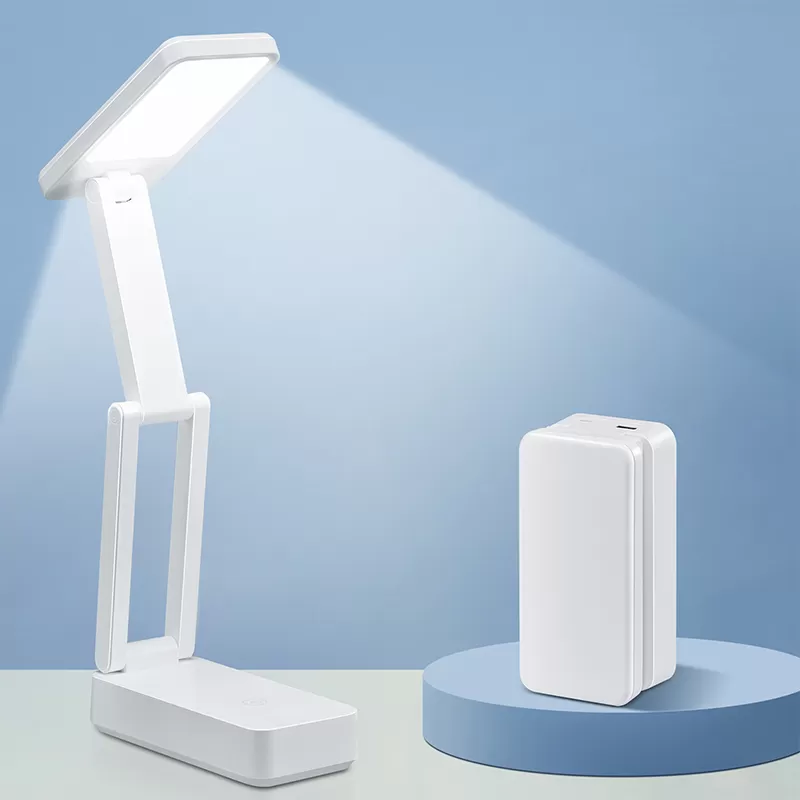
ADJUSTABLE LIGHTING STRUCTURE / WH-C30
WH-C30 Folding Desk Lamp
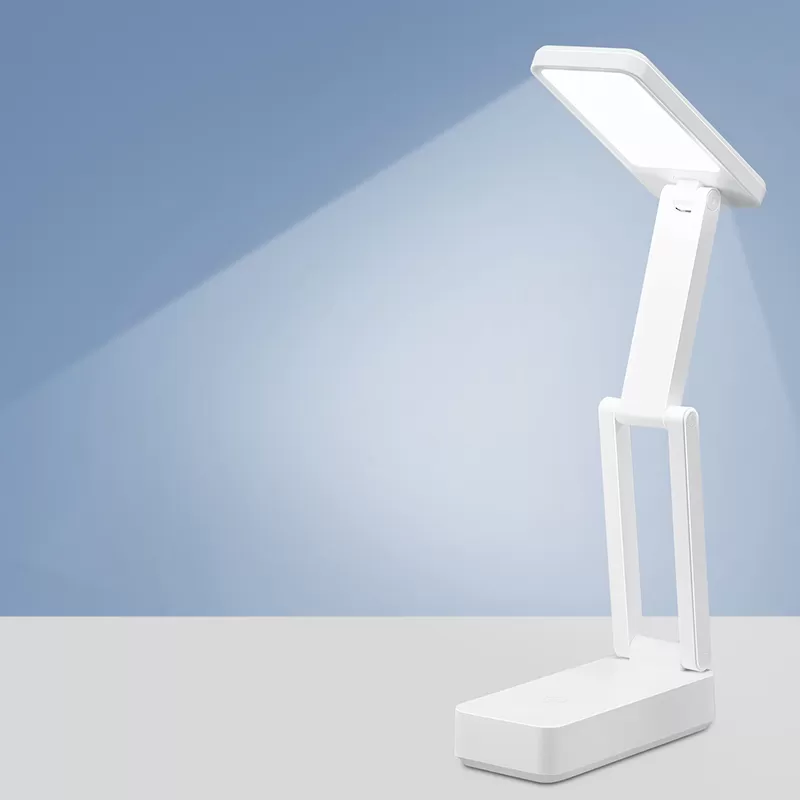
The OneFire WH-C30 Folding Desk Lamp features an adjustable 180-degree structure, 8W rated power, warm and white lighting modes, touch operation and stepless dimming.
Lighting advantage: The adjustable structure allows users to experiment with the lamp's position and direction instead of relying on a fixed light angle.
Brightness flexibility: Stepless dimming allows finer brightness adjustment than a simple on/off lighting system.
Recommended evaluation: Measure illuminance at several supported lamp positions and brightness settings. Compare warm and white lighting separately.
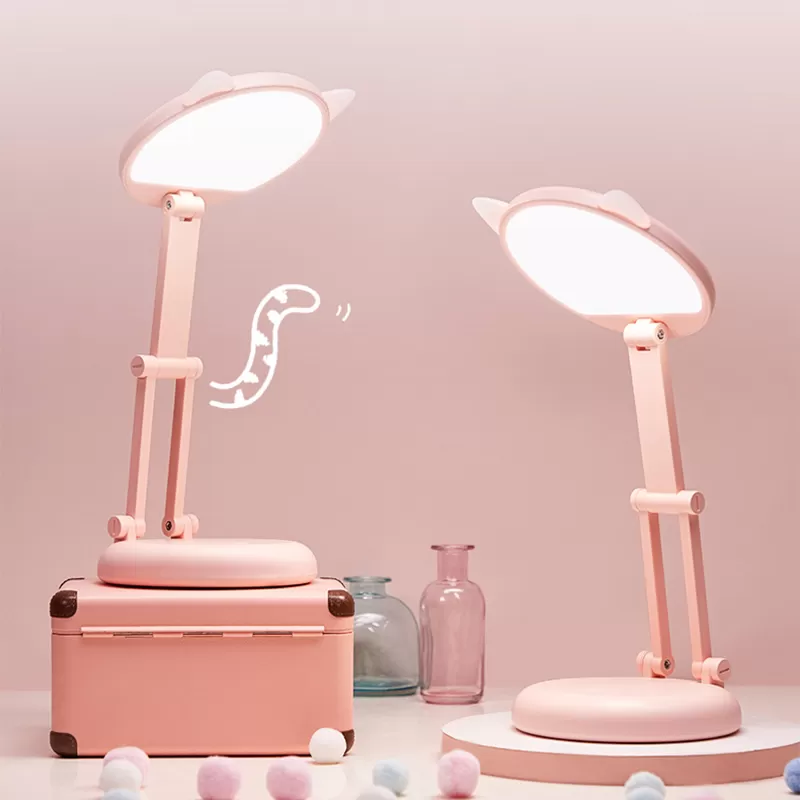
COMPACT PORTABLE LIGHTING / WH-C17
WH-C17 Portable Desk Lamp
The WH-C17 Portable Desk Lamp combines a compact folding cat-ear design with natural light, stepless dimming, touch control, 1.5W rated power and a 1200mAh rechargeable battery.
Product advantage: Its compact construction is relevant to portable lighting and gift-oriented retail collections where space and appearance matter.
Lighting consideration: A smaller lamp should be evaluated according to the area it can illuminate effectively rather than compared only by electrical wattage.
Recommended evaluation: Check illuminance on the intended reading surface at different supported brightness settings and lamp positions.
Specification note: Neither the WH-C30 nor the WH-C17 public product page provides sufficient measured illuminance, lumen output or detailed light-distribution data to establish that it achieves 500 lux across a defined desk area. Actual sample measurements are necessary for that assessment.
Retailers and lighting brands can explore additional models in OneFire's portable LED desk lamp collection and evaluate the lighting characteristics appropriate for their intended market.
6. How to Measure Desk Lamp Brightness With a Lux Meter
A lux meter provides a practical way to evaluate how much light reaches a work surface. It can help consumers adjust their desk setup and allow OEM buyers to compare different lamp samples under consistent conditions.
For a meaningful comparison, avoid measuring only the brightest point directly below the lamp. The reading area should be evaluated as a whole.
Define the task area. Select the portion of the desk normally used for reading, writing or studying. Record its dimensions.
Record ambient lighting. Measure the existing illumination with the desk lamp switched off. Keep other room lighting conditions consistent during the test.
Set the lamp position. Record the distance from the light source to the work surface, along with the lamp angle and selected light mode.
Measure on the task surface. Place the lux meter sensor on the working plane, following the instrument's instructions. Avoid shading the sensor with your hand or body.
Measure multiple positions. Include the central area and several surrounding locations to evaluate light distribution.
Repeat at different settings. Compare brightness levels, color modes and supported lamp positions. For rechargeable models, also document the battery or external-power condition.
ILLUSTRATIVE MEASUREMENT EXAMPLE
Nine-Point Desk Illuminance Test
REAR OF DESK
400 | 500 | 400
550 | 700 | 550
450 | 500 | 450
FRONT OF DESK
Maximum illuminance: 700 lux
Minimum illuminance: 400 lux
Average illuminance: 500 lux
Illustrative uniformity ratio: 0.80
All nine readings are hypothetical values in lux, provided to demonstrate the calculation method. They are not measured OneFire product results or a substitute for a formal photometric test.
How to Calculate Illuminance Uniformity
A simple uniformity indicator can be calculated by dividing the minimum measured illuminance by the average illuminance across the selected area.
U = E(min) / E(avg)
In the example above, dividing 400 lux by 500 lux produces a uniformity ratio of 0.80. Higher ratios generally indicate more even illumination across the measured area, although suitable acceptance criteria depend on the task and applicable measurement method.
This approach provides more useful information than a single center-point brightness claim. A lamp advertised with a high maximum lux value may still leave significant portions of the desk insufficiently illuminated.
7. Beyond Lux: Glare, Flicker and Light Distribution
A desk lamp can provide sufficient measured illuminance and still be uncomfortable to use. Lighting quality includes several characteristics that cannot be described by a single lux reading.
Direct Glare
Direct glare can occur when a bright light source is visible within the user's normal field of view. Lamp shielding, diffuser design, viewing angle and source brightness all influence the result.
Practical check: Sit in the normal working position and verify whether the light source causes uncomfortable brightness.
Reflected Glare
Glossy paper, tablet screens, polished desks and computer monitors can reflect a lamp's output toward the user's eyes. This can make text or screen content more difficult to see even when illuminance is adequate.
Practical check: Adjust the supported lamp angle and inspect the working surface for distracting reflections.
LED Flicker
LED light output may fluctuate over time depending on the driver and dimming system. Some fluctuations are visible, while others require suitable measurement equipment to detect and characterize.
A rechargeable power supply does not automatically eliminate flicker. Driver design and brightness-control methods remain important.
Practical check: Request measured temporal light modulation data for the relevant operating and dimming modes when flicker performance is a purchasing requirement.
Color Rendering
The color rendering index, or CRI, describes how a light source renders colors relative to a reference illuminant. It is particularly relevant to drawing, crafts, design work and other activities involving color recognition.
Practical check: Ask for measured CRI data if accurate color appearance is important to the intended application.
When evaluating products advertised as eye-care desk lamps, buyers should review supporting photometric and electrical measurements. Descriptions such as soft light, flicker-free or eye protection should not be treated as verified performance claims without appropriate evidence.
8. Does a Rechargeable Desk Lamp Become Dimmer as the Battery Discharges?
Some rechargeable desk lamps maintain relatively stable light output during much of the discharge cycle, while others gradually reduce brightness as the available battery energy decreases.
The behavior depends on the LED driver, battery voltage, power-management design and selected operating mode. Measuring brightness immediately after charging does not necessarily describe how well a lamp performs later in the same session.
Total Runtime vs. Usable Reading Runtime
Total runtime: The time until the lamp switches off under the specified test conditions.
Usable reading runtime: The duration for which the lamp maintains sufficient illumination for the intended reading task under an agreed test setup.
For example, a lamp could remain illuminated for several hours but fall below a buyer's target illuminance before its battery is completely discharged. Both total runtime and maintained lighting performance should therefore be evaluated.
For more information about battery energy, actual power consumption and runtime measurement, read our Rechargeable Desk Lamp Battery Life Guide. It explains the electrical factors that complement the lighting-quality measurements discussed here.
9. How to Specify LED Desk Lamp Brightness for Wholesale and OEM Orders
For retailers, lighting distributors and private-label brands, the phrase bright LED desk lamp is not a complete technical specification. A meaningful product requirement should describe the illumination target, measurement conditions and relevant quality characteristics.
OEM LIGHTING PERFORMANCE BRIEF
Recommended Datasheet Fields
01. Target illuminance
Define the required average illuminance and intended task, such as reading, studying or document work.
02. Measurement distance and area
Specify the lamp position, measurement plane, test area and lighting conditions.
03. Light distribution
Request center, minimum and average illuminance values across the defined working area.
04. Color temperature and rendering
Confirm measured CCT for each lighting mode and CRI where relevant to the intended application.
05. Dimming and flicker performance
Evaluate minimum and maximum brightness, control behavior and measured temporal light modulation where required.
06. Battery operating conditions
For rechargeable designs, document light-output stability, battery charge condition and usable lighting duration.
07. Product approval criteria
Confirm the actual production configuration, agreed test methodology, sample acceptance requirements and supporting documentation.
These specifications allow buyers to compare different lamp designs based on actual lighting performance rather than appearance, rated wattage or unqualified marketing claims.
If you are developing an adjustable or rechargeable LED desk lamp for a retail lighting collection, contact OneFire with your lighting requirements to discuss available models, sample evaluation and OEM/ODM feasibility.
Frequently Asked Questions About Desk Lamp Brightness
Is 500 lux enough for reading and studying?
Around 500 lux is a common reference for routine reading, writing and office desk activities. However, smaller text, lower-contrast material and individual visual needs may require additional illumination. Glare and uniformity also affect visual comfort.
How many lumens should a desk lamp have for reading?
There is no universal lumen requirement because different lamp designs distribute light differently. The more useful measurement is the illuminance achieved across the actual reading area at the intended lamp distance and angle.
Is an 8W LED desk lamp brighter than a 5W lamp?
Not necessarily. LED efficiency, optical design, diffuser characteristics, light distribution and lamp position affect the amount of illumination reaching the desk. Compare measured lux and lumen data rather than rated wattage alone.
Can a desk lamp be too bright?
Yes. Excessively bright sources, uncomfortable reflections and strong contrasts between the desk and surrounding environment can reduce visual comfort. Adjustable brightness and appropriate positioning help users adapt the illumination to their needs.
Can I measure desk lamp lux with a smartphone?
Some smartphone applications can provide approximate comparisons between lighting conditions. However, phone sensors and camera-based methods may have substantial measurement errors. Use a suitable calibrated lux meter for reliable product evaluation or formal acceptance testing.
What color temperature is best for a study lamp?
Neutral white lighting is a popular choice for general study and daytime desk activities, while warm white may be preferred for relaxed evening reading. Appropriate illuminance, glare control and personal preference are also important.
How should wholesale buyers compare LED desk lamp brightness?
Compare illuminance at the same measurement distance and across the same task area. Review minimum and average lux, light distribution, dimming performance, color temperature, glare, flicker and output stability under the intended power conditions.
Final Thoughts: Choose a Desk Lamp by Usable Light, Not Wattage Alone
The best desk lamp is not necessarily the product with the highest wattage, largest battery or brightest center point. A suitable reading light delivers adequate illumination across the intended working area while allowing comfortable positioning and brightness adjustment.
Around 500 lux is a useful starting benchmark for many desk activities, but the appropriate lighting level depends on the task, room conditions and individual needs. Measuring illuminance and evaluating light distribution provide a more reliable basis for product selection than comparing marketing descriptions alone.
OneFire's adjustable and rechargeable desk lamp designs provide different product configurations for home lighting, study spaces, portable use and wholesale distribution. Model-specific performance should be evaluated according to the intended lighting application.