English
 한국어
 français
 Deutsch
 Español
 italiano
 русский
 português
 العربية
 Türkçe
 Polska

A Bluetooth speaker lamp may look like a simple combination of a light and a wireless speaker. For OEM buyers, however, the real challenge is ensuring that the lighting, audio, charging system and electronic controls work reliably together in the finished product.
A speaker lamp designed for bedside retail may require warm lighting, an alarm clock and wireless phone charging. A decorative gift model may prioritize RGB effects, distinctive styling and Bluetooth playback. Even when two products look similar, their electronic configurations, power requirements and production costs can differ substantially.
This guide explains how lighting distributors, importers and private-label brands can evaluate OEM Bluetooth speaker lamps before ordering. It covers audio performance, wireless charging, LED lighting, model selection, customization and practical sample testing, using real products from OneFire's Bluetooth speaker light collection as examples.
What OEM Buyers Should Check First
Before requesting a wholesale quotation, define these five requirements:
Speaker performance, Bluetooth stability and usable volume.
Rated wireless charging power, device compatibility and heat control.
Warm light, RGB modes, brightness control and color consistency.
Plug-in or rechargeable design, clock, alarm and optional functions.
Branding, sample approval, documentation and production requirements.
PRODUCT CONFIGURATION
1. Start with the Right Bluetooth Speaker Lamp Platform
The first OEM decision is whether to customize an existing product platform or develop a new housing and electronic design. Starting from an established model usually reduces the number of unknowns in sampling and product evaluation, although any modification still needs feasibility assessment.
OneFire's wireless charger Bluetooth speaker lamp range includes several distinctive designs. The WH-J11, WH-J12 and WH-J15 illustrate how similar electronic functions can be packaged for different retail audiences.
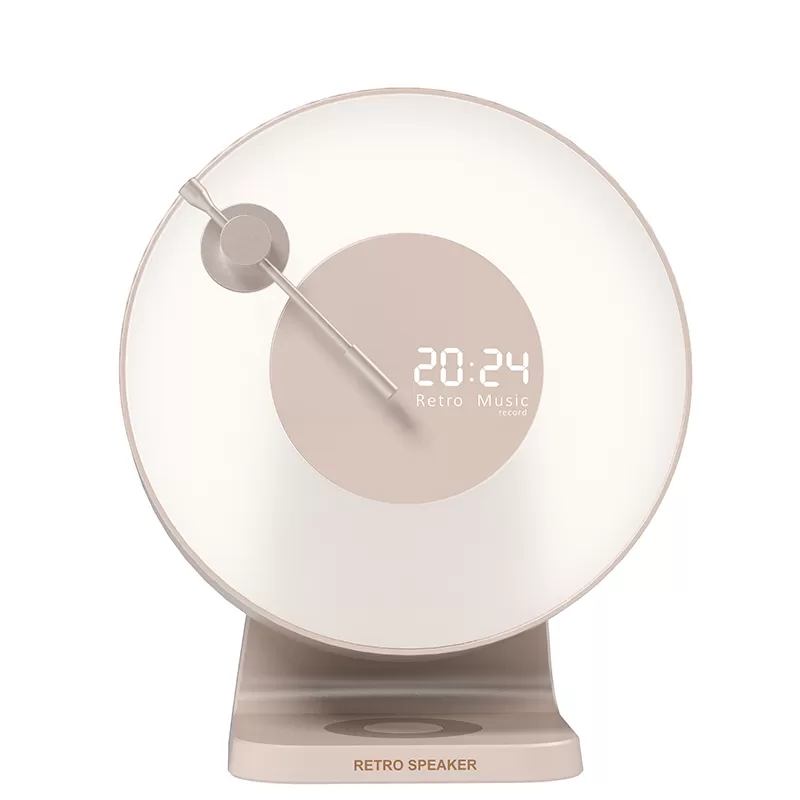
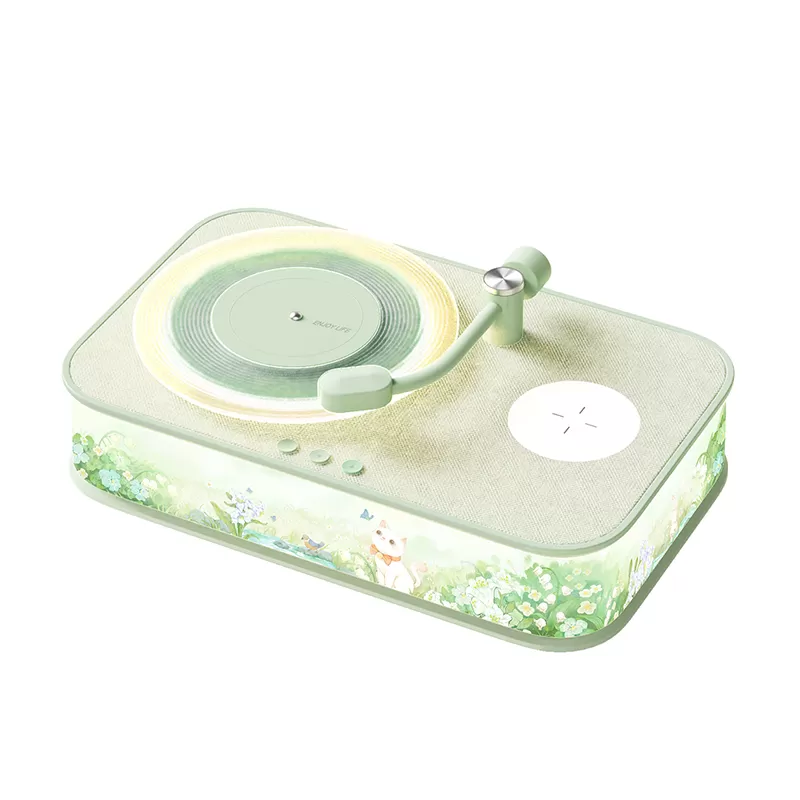
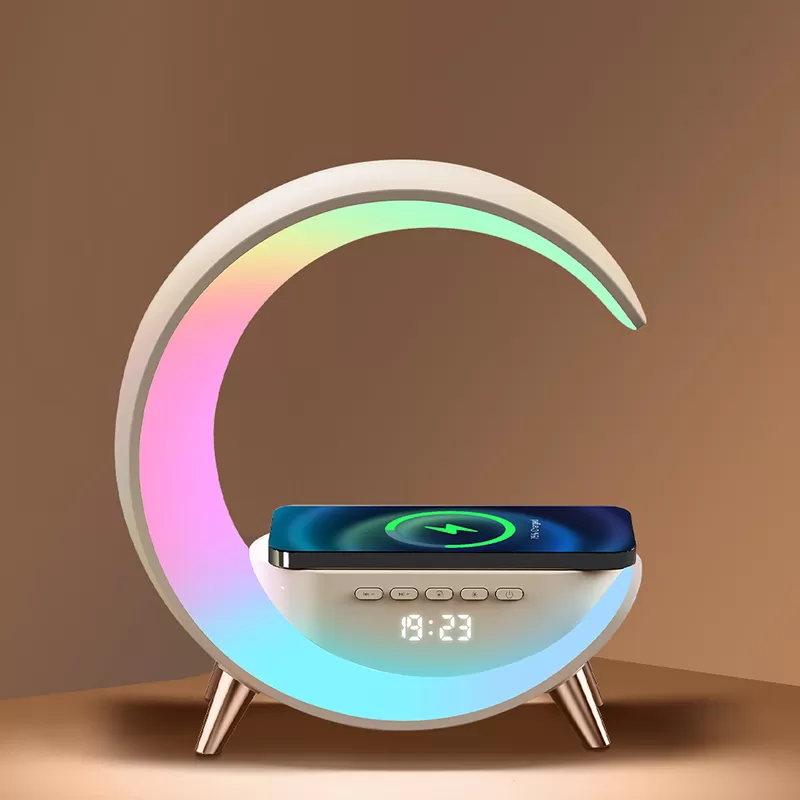
OEM buying note: These are examples of published OneFire models, not interchangeable configurations. Battery design, lighting modes, AI voice control and other options differ by SKU. Confirm the exact version before preparing a private-label specification.
AUDIO PERFORMANCE
2. How to Evaluate Bluetooth Speaker Lamp Audio Quality
Speaker power alone does not determine sound quality. The housing volume, speaker driver, amplifier tuning and positioning of internal components can affect clarity, bass response and distortion. In a multifunctional LED speaker lamp, the wireless charging assembly and lighting components may also influence the internal space available for audio design.
Test Sound Clarity at Realistic Listening Levels
For a bedside or desk product, evaluate speech, vocals and instrumental music at moderate volume. Listen for harsh high frequencies, cabinet vibration and audible distortion. Repeat the assessment at higher volume to check whether the amplifier or enclosure introduces rattling.
Check Bluetooth Connection Reliability
Pair the sample with different supported mobile devices. Test initial pairing, reconnection after power cycling and signal stability during playback. Confirm the supported Bluetooth functions and audio codecs instead of relying only on an advertised Bluetooth version number.
Test Audio While Other Functions Are Active
One of the most useful checks is simultaneous operation. Play audio while changing the LED lighting modes and while wirelessly charging a compatible phone. Listen for interference, interruptions or unusual electronic noise. Repeat these tests with the power adapter and cable intended for the target market.
Suggested Audio Sample Test Record
Check speech and vocals at consistent volume and distance.
Listen for rattling, buzzing and harshness during playback.
Record pairing, reconnection and interruption results.
Check audio alongside lighting and wireless charging.
Use agreed test tracks, phone models, power supplies and acceptance criteria. Record the actual results instead of assuming a particular audio specification applies to every model.
WIRELESS CHARGING
3. What Does 15W Wireless Charging Mean in an LED Speaker Lamp?
OneFire lists a 15W wireless charging function for the WH-J11, WH-J12 and WH-J15. However, a 15W rating should not be interpreted as a guaranteed 15W charging rate for every phone. Actual delivered power depends on the phone's receiving capability, charging protocol, alignment, power adapter and operating conditions.
A speaker lamp with wireless charging should be evaluated as an integrated electrical product. The charging surface, heat management and simultaneous load from the speaker and LEDs all matter.
Adapter Compatibility
Confirm the input power requirements and whether the supplied adapter is adequate for charging, Bluetooth playback and lighting at the same time.
Charging Alignment
Test the position of compatible phones on the charging surface, especially where the surrounding lamp design affects placement.
Heat and Stability
Measure temperatures during extended simultaneous use and check charging interruptions or abnormal heating under defined test conditions.
Does 15W Charging Mean a Product Is Qi Certified?
No. A published wireless charging power rating does not by itself prove Qi certification. The Wireless Power Consortium maintains a searchable database of certified products and explains how to verify a certificate against the exact product.
For OEM purchasing, ask whether the exact finished product and brand configuration have the required certification. Consult the Wireless Power Consortium's Qi certification guidance and certified product database.
LED LIGHTING SYSTEM
4. RGB Lighting, Brightness and User Controls
Lighting is a major part of a Bluetooth speaker lamp's retail identity, but the available modes need to match the intended user experience. Warm light may be important for bedside use, while RGB effects can support decorative and entertainment-oriented products.
The WH-J12 focuses on warm lighting with four brightness levels, including off. The WH-J15 offers warm, white, pink and flowing RGB modes, with 15 lighting modes listed on its product page. These are different lighting systems and should not be presented as identical features.
What Should Buyers Test?
Brightness consistency:Compare samples at the same dimming level and check for uneven output or visible flicker.
RGB color transitions:Check color changes, animation smoothness and whether the effects match the approved demonstration.
Control response:Test buttons, touch controls, clock settings and any optional voice-control functions.
Power cycling:Confirm the expected behavior when power is disconnected and restored, including how lighting and clock settings are handled.
If a private-label project requests a new RGB sequence or control interface, it may require firmware changes rather than a simple packaging customization. Discuss technical feasibility and sample approval before committing to the feature.
OEM AND ODM PLANNING
5. OEM Customization: What Can Be Changed and What Requires Development?
Customizing a Bluetooth speaker lamp is not always the same as printing a logo on an existing product. A useful OEM specification separates cosmetic changes from electronic modifications and new mechanical development.
LEVEL 01
Branding and Packaging
Examples include logo placement, gift box design, printed inserts, barcodes and product manuals. These changes still require artwork approval, labeling checks and order quantity confirmation.
LEVEL 02
Lighting and Electronics
Requests may involve available lighting modes, clock functions, power configurations or electronic controls. Feasibility depends on the existing circuit design, firmware and components.
LEVEL 03
New Housing or Speaker Design
New product shapes, speaker layouts or charging assemblies may require tooling, acoustic evaluation, additional testing and a separate ODM development schedule.
Why an Approved Golden Sample Matters
A golden sample is the agreed reference product used for production evaluation. For an OEM speaker lamp, it should establish more than appearance. Document the speaker behavior, lighting modes, charging operation, controls, accessories and packaging that the production units must match.
If a change is requested after approval, update the written specification and assess whether new validation is necessary. This helps reduce disagreements between the original sample and delivered goods.
QUALITY VERIFICATION
6. Bluetooth Speaker Lamp OEM Sample Testing Checklist
Before bulk production, buyers should agree on a repeatable sample test. The checklist below is a suggested purchasing framework, not a claim that every OneFire model has already completed each test.
01. Bluetooth and Audio
Verify pairing, reconnect behavior, supported device compatibility, speaker clarity, distortion and audio playback during concurrent lighting and charging.
02. Wireless Charging
Use defined compatible phones and adapters to check phone alignment, charging stability, operating temperature and the required certification evidence.
03. LED and Control Functions
Check RGB mode sequence, brightness levels, clock and alarm operation, buttons and any optional electronic features.
04. Electrical and Mechanical Design
Inspect the adapter, cable, enclosure assembly, accessible parts, stability and heat behavior using the agreed operating conditions.
05. Packaging and Shipment
Confirm artwork, model number, accessories, product labeling, carton protection and documents required for the destination market.
DOCUMENTATION AND IMPORT READINESS
7. Compliance Documents to Request Before OEM Production
Bluetooth speaker lamps can contain radio transmitters, wireless power transmitters and, in rechargeable versions, lithium batteries. Compliance depends on the finished product's design and the destination market. A general factory certificate should not be treated as proof that every individual SKU is approved for sale.
Bluetooth Qualification
Check the qualification status of the marketed Bluetooth product, including the brand and model information. Rebranding arrangements may create responsibilities that differ from simply reselling another company's product.
Wireless Charging Certification
Ask for evidence supporting any Qi Certified claim, including the registered product identity. A 15W charging specification alone does not establish certification.
Battery Transport Documents
For rechargeable versions containing lithium batteries, request relevant transport test documentation, including the applicable UN 38.3 test summary, and confirm shipment requirements.
For US, EU and UK distribution, buyers should additionally verify the applicable radio, electrical safety, electromagnetic compatibility, labeling and environmental requirements for their particular product. Product classification and conformity procedures are not identical across markets.
COMMERCIAL EVALUATION
8. What Affects Bluetooth Speaker Lamp OEM Pricing?
An OEM quotation should be evaluated against a defined configuration rather than compared only by unit price. Two Bluetooth speaker lamps can differ in acoustic components, wireless charging electronics, housing construction, packaging and certification requirements.
Main Cost Drivers
Speaker and amplifier: Driver selection, amplifier design and acoustic performance requirements.
Wireless charging: Transmitter components, coil design, power supply and validation requirements.
Lighting: LED quantity, RGB modes, diffusers and control electronics.
Mechanical design: Housing materials, finish, assembly complexity and tooling.
Customization: New firmware, branding, packaging artwork, samples and potential retesting.
Order terms: Quantity, accessories, shipping arrangement, Incoterms and production schedule.
For a meaningful supplier comparison, request an itemized specification and quotation based on the same product version, order quantity, test requirements and delivery terms. The lowest initial unit price may not represent the lowest landed cost if samples, packaging or documentation need additional work.
OEM PROCUREMENT WORKFLOW
9. A Practical OEM Buying Process
Step 1. Define the Target Product
Choose the target retail channel, preferred housing, lighting effects, audio functions and charging requirements.
Step 2. Select an Existing Model or ODM Concept
Compare published models, identify required changes and ask the supplier to confirm feasibility.
Step 3. Test the Sample
Verify audio, wireless charging, lighting, housing and accessories against agreed acceptance criteria.
Step 4. Approve Branding and Documentation
Finalize the logo, color box, labels, manuals and any model-specific compliance requirements.
Step 5. Confirm Bulk Production
Agree on the approved sample, quantity, production schedule, inspection plan and delivery conditions.
COMMON OEM QUESTIONS
Bluetooth Speaker Lamp OEM Buying FAQ
1. Is every Bluetooth speaker lamp equipped with wireless charging?
No. Wireless charging is a model-specific function. The OneFire WH-J11, WH-J12 and WH-J15 list 15W wireless charging, but buyers should confirm the charging configuration of any other speaker lamp before ordering.
2. Does a 15W wireless charger always charge a phone at 15W?
No. Actual charging performance depends on the receiving device, power supply, alignment, compatibility and operating conditions. Buyers should test representative phones and request applicable wireless charging documentation.
3. How should an OEM buyer evaluate Bluetooth speaker audio quality?
Use agreed audio samples at consistent listening levels. Check clarity, distortion, Bluetooth reconnection and playback while LED lighting and wireless charging are operating.
4. Can Bluetooth speaker lamp lighting modes be customized?
Potential lighting changes depend on the model's LED system, control electronics and firmware. Buyers should submit the required modes and confirm development feasibility and testing needs before ordering.
5. What is the difference between the WH-J11, WH-J12 and WH-J15?
The WH-J11 uses a vertical turntable-inspired design with RGB lighting and a clock. The WH-J12 has a classical turntable-style housing with warm light and several power versions. The WH-J15 uses a crescent moon design with multiple lighting modes and clock functionality.
6. Can a private-label brand use an existing Bluetooth qualification?
Rebranding and selling Bluetooth products may require qualification under the brand owner's company account, depending on the business arrangement. Buyers should review the current Bluetooth SIG qualification rules rather than assuming the supplier's qualification automatically covers their product.
7. What information should be included in an OEM speaker lamp inquiry?
Provide the preferred model, estimated quantity, target market, wireless charging requirements, audio and lighting functions, power configuration, branding details, packaging requirements and target delivery schedule.
Conclusion: Choose the Electronic Configuration Before the Packaging
A successful OEM Bluetooth speaker lamp project starts with a clearly defined electronic and user-experience specification. Audio quality, wireless charging, lighting controls and power design should be evaluated together, not as separate marketing features. Once the technical platform is approved, branding and packaging can be finalized around the actual product.
For buyers comparing existing designs, OneFire offers different options through its Bluetooth LED speaker lamp collection, including wireless charging speaker lamps for decorative bedside and lifestyle product ranges.
If you are evaluating an OEM or ODM project, start with a model reference, expected order quantity, target market and required functions. These details make it easier to discuss feasible specifications, sample testing and quotation terms with the supplier.
OEM BLUETOOTH SPEAKER LAMP SOURCING
Discuss Your Speaker Lamp Project with OneFire
Looking for Bluetooth speaker lamps with RGB lighting, wireless charging or private-label packaging? Share your preferred product model and purchasing requirements to discuss available configurations and OEM cooperation.
Contact OneFire for OEM Project Details
Email:marketing@onefire.cn